
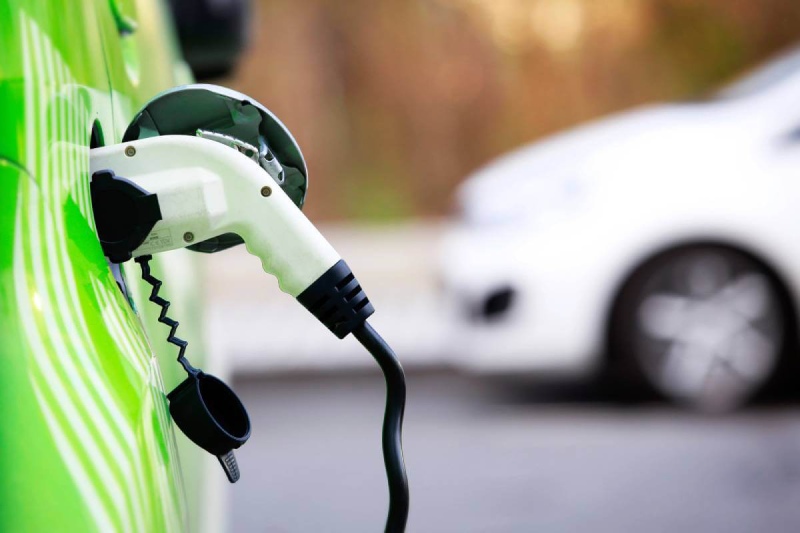
Clean Energy Tax Credits Connecticut Business Owners Can Still Capitalize On
“Seize the moment. Man was never intended to become an oyster.” -Teddy Roosevelt
Quick Overview: Capitalize on Clean Energy Tax Credits Before They’re Gone
- EV credits disappear September 30, 2025: if you want up to $40K per vehicle, you’ve got less than 3 months.
- Home energy tax credits end December 31, 2025: thinking solar panels or heat pumps for your home office? The clock’s ticking.
- Solar or wind project Investment Tax Credits phase out starting in 2026: you must begin construction by July 4, 2026, to keep the 30 percent credit.
- Charging stations? You’ve got until June 30, 2026 (but only if you’re in a qualified area).
As a busy business owner, you probably haven’t had time to dig into what the new One Big Beautiful Bill Act (OBBBA) legislation means for your clean energy plans. Due to the OBBBA, many clean energy tax credits for energy-efficient upgrades are either being cut, phased out, or restructured. And some incentives may have shorter timelines than you might have originally anticipated.
So, here’s what’s changing and where you still have room to maneuver (if we move fast).
Electric Vehicles
Let’s start with what’s about to disappear first. If you’re planning to electrify part of your business fleet, you have until September 30, 2025, to get those vehicles purchased and in service. That’s the deadline for the Section 30D credit (up to $7.5K per vehicle) and the Section 45W commercial vehicle credit (up to $40K per qualifying vehicle).
And just to be clear: this isn’t a “start the paperwork by September” situation. You need to have the vehicle in your possession and operating for business use before the deadline hits.
There are also rules around final assembly in North America and domestic battery sourcing that determine whether a vehicle qualifies. We’ll need to run those checks before you buy.
Residential Energy Upgrades
If you’re making improvements to your personal residence and you’re a business owner using a portion of your home for work (i.e., you take a home office deduction), this part affects you directly.
The two big credits here (Section 25D for things like solar panels, batteries, and geothermal, and Section 25C for items like energy-efficient HVAC, windows, or insulation) are both expiring on December 31, 2025.
The 25D credit is a juicy 30 percent of qualifying costs. The 25C credit caps at $3.2K per year. But here’s the thing: if your system isn’t installed and fully operational by the end of 2025, you lose the credit. It’s gotta be in by December 31 or you’re not eligible.
Solar and Wind Projects
Now, if you’re considering larger solar or wind investments (say, for a commercial facility), you’ve got slightly more breathing room. The current Investment Tax Credit (ITC) gives you a 30 percent federal tax credit on eligible solar/wind project costs, but only if you “begin construction” by July 4, 2026.
What qualifies as “beginning construction”? It’s not just signing a contract. You must either:
- Start physical work (think trenching, mounting, wiring), OR
- Have spent at least 5 percent of the total project cost.
If you don’t meet that threshold, the credit begins phasing down and largely disappears after 2027.
So, if this has even been on your long-term radar, now’s the time to start the engineering, permitting, and financing conversations. And we can help model out whether it’s worth accelerating based on your tax position and cost structure.
Battery Storage, Geothermal, Fuel Cells
These get a little more runway. Section 48 covers these too, and credits remain until 2033, gradually phasing down after that. If you’re pursuing these technologies for your business site, there’s time. But it’s still smart to get ahead while the full 30 percent is available.
EV Charging Infrastructure
This is one of the last standing incentives after the EV credit ends.
The Section 30C credit still gives you :
- 30 percent credit up to $100K per charging port.
- But only if the charger is installed in a non-urban or low-income census tract.
So, yes, it’s still generous. But it’s location-specific. And we can help you verify that your Connecticut business location qualifies.
So What Should You Do Right Now?
Let’s break this down into immediate moves and strategic planning:
Urgent moves:
- Buy or lease EVs now to make the September 30, 2025, deadline. Start talking to dealers. Supply issues can delay delivery and kill eligibility.
- For home energy improvements: Get them installed and running by December 31, 2025.
- Verify your tax liability. These credits are non-refundable but may be allowed to carry forward. We’ll project 2025 taxable income to ensure you can absorb the credits.
Strategic planning:
- Solar/wind projects: If they’re on your radar, start planning now. Engineering, site studies, permits. Aim for the July 4, 2026 “start” benchmark.
- Charging infrastructure: Check if your business is in a qualifying area. If so, this is one of the last big credits left.
- Review your state/local programs: These will take on outsized importance. Some states (like CA, NY, IL, and MA) have robust programs that could replace what the feds are sunsetting.
That’s your shortlist. But the reality is, we’ll need to re-evaluate your project economics in light of these changing credits. Without them, some projects may no longer be viable unless strong state or local rebates step in to fill the gap.
FAQ
“Can I claim both the federal EV credit and a state rebate for the same vehicle?”
Yes. Federal and state incentives often stack. Just know that some state rebates reduce your basis in the vehicle, which could affect depreciation or credit limits.
“Does ‘beginning construction’ mean I just signed a contract with a vendor?”
No. You must have either (a) incurred 5 percent of total costs, or (b) begun actual physical work. A signed contract alone isn’t sufficient proof for IRS purposes.
“What happens if I install a solar system after 2027?”
Unless Congress extends the credit, it’s gone. Projects installed post-2027 will likely have no ITC benefit unless you began construction by the 2026 deadline. (Note: Other clean electricity technologies like battery storage and geothermal have different, longer schedules.)
“I work from my Connecticut home. Can I claim credits for both my business and personal energy upgrades?”
Yes, partially. You can prorate based on the square footage of your home office. Residential energy credits still apply, but business use adds complexity (and opportunity).
“Are leased EVs eligible for credits?”
Leased vehicles don’t get the credit directly, but lessors may pass it on via lower lease pricing. Ask the leasing company if they’re factoring in the Section 30D credit.
“What if I use bonus depreciation instead of the credit?”
Bonus depreciation and energy credits interact. In some cases, claiming the credit requires reducing the depreciable basis. We’ll model both scenarios to see which nets you more benefit.
“Are there any risks if I claim these credits and my business situation changes later?”
Yes. If, after claiming a credit, certain conditions are not maintained (for example, if the property is disposed of prematurely within a certain period), a portion or all of the credit may have to be repaid to the IRS. Also, the OBBBA has introduced new “Prohibited Foreign Entity” (PFE) restrictions. We can help you assess any potential risks based on your specific project and business structure.
How We Can Help
We’re entering the final lap for many lucrative clean energy tax credits. Some require action in the next 60 days, others by year-end, and a few still allow for longer-range planning. But across the board, this is a take-action moment.
So, let’s schedule time to go through your specific projects and deadlines. We’ll build a custom strategy to capture what’s left before it’s too late:
calendly.com/bhta-mm/meeting