
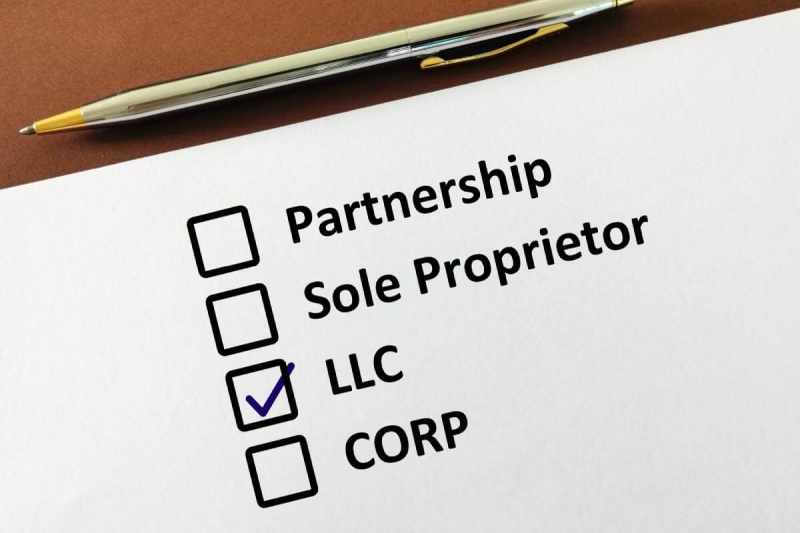
Entity Type Affects Your Connecticut Business’s Bottom Line
“Definiteness of purpose is the starting point of all achievement.” – W. Clement Stone
Running a business means making decisions. Some are easy. Others, not so much. Choosing how to structure your business falls into that second category.
Another term for this is selecting your business’s entity type. I want to emphasize this today because choosing the right one can change your tax life.
Take the qualified business income (QBI) deduction. Certain partnerships, LLCs, and S corporations still qualify for up to a 20 percent deduction on eligible income-at least for now. Congress has been tossing around ideas to revise or scrap this break, so it’s worth paying attention. Sometimes, how your business is structured can mean thousands of dollars saved… or lost.
How do you choose? Well, let me tell you about the most common business entities and what you need to know about each:
Sole Proprietorship: Running solo? This is the simplest setup. Just you. All the profits are yours, but so are the risks. Your business income flows directly onto your personal tax return. Easy, right? Sure-until self-employment taxes hit.
Skip a quarterly payment, and you’ll hear from the IRS. While the simplicity is appealing, it can expose you to more risk than you might expect. Need to take out a loan? Sole proprietorships can find it harder to secure financing, especially with banks tightening lending standards in 2025.
Limited Liability Company (LLC): LLCs remain a popular choice-and for good reason. They offer liability protection, shielding your personal assets (your house, savings, car) if the business faces lawsuits or debt. By default, single-member LLCs are taxed like sole proprietorships, while multi-member ones resemble partnerships. But you can elect to be taxed as an S or C corporation, which might lower your tax bill depending on your profits.
The QBI deduction I mentioned at the beginning could apply, but with lawmakers eyeing changes, it’s smart to double-check. Plus, in 2025’s climate of stricter compliance, staying on top of state-specific LLC requirements is crucial.
S Corporation: Want to avoid double taxation but still have liability protection? An S corp might be your answer. You pay yourself a salary-subject to employment taxes-and the remaining profits pass through as distributions, which aren’t subject to those taxes.
It sounds like a win, but there’s a catch: you need to pay yourself a “reasonable” salary. The IRS is keeping a close eye on this in 2025, so underpaying yourself to maximize distributions can backfire. Not all businesses qualify for S corp status, and some states have their own rules and taxes, so make sure you check the specifics before making the switch.
C Corporation: Thinking big-venture capital, large-scale expansion? A C corp might be the ticket. Corporate tax rates are stable for now, but double taxation is still an issue: once on the business’s profits and again when dividends are paid out.
That said, some shareholders can qualify for capital gains exclusions when selling certain stock, which can be a significant advantage for long-term planning. Just be careful-many small businesses end up paying more overall due to the double tax hit. If you’re planning to reinvest profits, a C corp could work in your favor. But if you need those profits for personal use, the tax consequences can pile up fast.
Partnership: Going into business with someone else? A partnership might make sense. You’ll file Form 1065 and distribute K-1s to partners, with profits and losses passing through to individual tax returns.
Sounds simple enough-until a partner racks up expenses or makes decisions that affect you financially. In 2025, with healthcare costs rising and business deductions under review, clear communication isn’t just helpful-it’s essential. Partnerships also come with joint liability unless structured otherwise, which means one partner’s mistake can cost you both.
You should never let the tax tail wag the dog of your Connecticut business, and there’s a lot more to know about choosing your entity type. If you want to learn more, make some time to chat.